Generations of Technology
Walks through five generations of Matt's family, each arriving at the birth of a new kind of literacy, and lands on the question that powers the rest of the book: what kind of world will my children's children grow up in?
Published February 5, 2026
"Now Jesus himself was about thirty years old when he began his ministry. He was the son, so it was thought, of Joseph, the son of Heli, the son of Matthat, the son of Levi, the son of Melki, the son of Jannai, the son of Joseph, the son of Mattathias, the son of Amos, the son of Nahum, the son of Esli, the son of Naggai, the son of Maath, the son of Mattathias, the son of Semein, the son of Josek, the son of Joda, the son of Joanan, the son of Rhesa…”
— Luke 3:23
There is a passage in the Bible that is perhaps my favorite. Most people skip it.
It is not a miracle, nor a sermon, nor a quotable scripture. It is a genealogy of Jesus.
It goes on, naming name after name. Father after father. A man is born, grows up, falls in love, has fears, works, suffers, hopes, has a child, becomes old, and then becomes a name in a line. The genealogy goes on and on, listing names for pages until it reaches, "the son of Seth, the son of Adam, the son of God."
I remember, in the silence of a COVID night, reading these pages in my Bible from the 1800s. Luke 3:23 was almost like a meditation, repeating a steady mantra, each name a reminder of the brevity of life. My entire life, for all its intensity from the inside, is simply one name. There is a stack of names above it, and, in the instant of eternity, a stack of names below mine. We were pregnant with our first child at the time. I didn't know it at the time, but now that I read this I realize that we would go on to give our son the name Luke. Continuity. Eternity.
I felt a similar emotion years ago in Udaipur, India. The City Palace overlooks the lake in this city of lakes. On the wall of its entryway hangs perhaps the most important thing I have ever seen in a museum. Portrait after portrait of Udaipur's rulers, each one painted at roughly the same age. Fourteen portraits of fourteen generations of sons. It was like Luke 3:23 as a wall of portraits. Cycle, cycle, cycle, cycle, cycle, cycle. All of a family’s history in one instant, each of those faces a frame on a film strip, streaking through eternity. Somehow, looking up at that wall, I wanted to live life more beautifully, more purposefully than I had the moment before.
We like to think we are unique. And of course we are. Each soul is unrepeatable. But from the altitude of history, we are something humbler. We are another wave lapping against the shore.
Books are a kind of time travel. Lineage is another kind of time travel. To look backward through our history is to climb into a machine and watch the centuries compress. So before we turn to the future, I want to quickly zoom through my history, not to indulge nostalgia, but to understand the speed of change, and to ask the question that now sits at the center of everything for me:
What kind of world will my children's children be born into?
My Lineage
My great-grandfather was born in Bologna in August 1871, weeks after King Victor Emmanuel II rolled into Rome, completing the political unification of Italy. My great-grandfather was one of the very first babies born into a unified Italy. The great invention of his era was the nation itself. As we know, a unified Italy was not yet a literate Italy. That same year, the new country conducted its first national census. The data is clear. Most of the population had zero education. In the rural farming town of Medicina, on the outskirts of Bologna, where my great-grandfather was born, only about 15% of people could read. It is more than likely that his own father could not.
His son, my grandfather Marino, was born March 22, 1911, also in Medicina. We visited it a few years ago, drove past an auto body shop with our family name on it, and ate with our long-lost cousins who still farm onions on the land. In the old church we found the record of his baptism. Four months after he was born in 1911, Italy passed the Daneo-Credaro Reform, perhaps the largest educational reform in the country's history. It moved responsibility for elementary education from local municipalities to the national government. With this, Italy began to treat literacy not as a privilege, but as national infrastructure. He would go on to become a jazz musician, fight in the Pacific Theater, father my father, and one day become a teacher.
His son, my father, was born on August 8, 1949. About 19 months earlier, three physicists at Bell Labs (John Bardeen, Walter Brattain, and William Shockley) had revealed an invention: The transistor. A tiny switch. A gate for electricity. A device so small most people alive at the time could not possibly have understood what it would become. But that switch was the invention of my father’s generation, opening the age of computing.
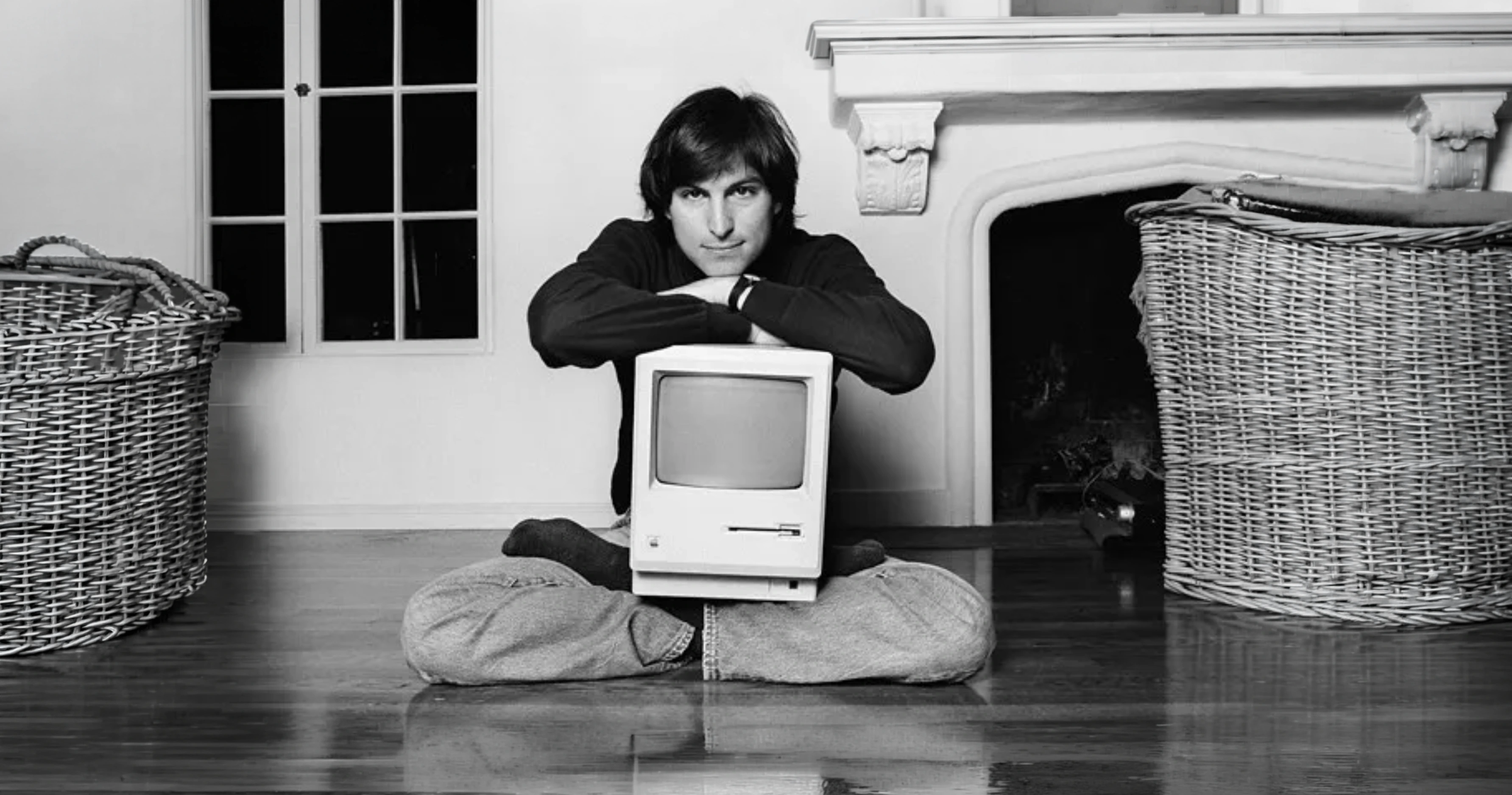
Then came me. Steve Jobs unveiled the Macintosh on Tuesday, January 24, 1984, while I was kicking in my mother's womb. Five days later, I was born. I entered the world as the graphical user interface began bringing computing out of laboratories and into daily human life. I grew up as the digital world was born. I remember floppy drives. I remember the dial-up sound, that strange mechanical song of bits moving through a phone line. I remember the internet arriving, then filling the world. I remember mobile phones and then smartphones filling every pocket and spare hour. And then I watched computers begin to speak, write, reason, draw, and dream.
Then came my son, Luke. He was born in September 2020, three months after OpenAI quietly released a technical model called GPT-3. The moment was quieter than the public arrival of ChatGPT two years later, but for those who saw it, as I had the blessing of doing in the little-known GPT Playground, the meaning was obvious. Something had crossed a threshold.
Five generations. A country unified. A population taught to read. A machine created to compute. A computer made personal. A machine taught to write and perhaps even think. Once I saw the pattern, I could not unsee it.
Each generation in my family arrived near the birth of a new kind of literacy. My great-grandfather's world needed national literacy. My grandfather's world needed mass schooling. My father's world needed the technical literacy of the computing age. My world needed digital literacy. My son's world will need AI literacy.
I also couldn’t help but wonder: if five generations carried us from widespread illiteracy to artificial intelligence, what will one more generation bring?
What kind of world will my children's children be born into?
There are days when that question fills me with wonder. There are days it fills me with dread.
The Pattern Begins
I was reading Generations by William Strauss and Neil Howe, a book that traces five hundred years of American history through the same lens I was now holding up to my own family. They walked the lineage of a nation, generation by generation, from the Puritans of the 1580s forward, and discovered a pattern. Generations, they argue, come in four archetypes that repeat in a fixed sequence:
The Prophet, born after a Crisis, is raised as indulged children of a confident postwar era. They come of age as moralistic, individualistic young crusaders during an Awakening. The Nomad, born during an Awakening, is raised as under-protected children while their parents are off chasing inner-life and spiritual rebellion. They come of age as cynical, pragmatic, alienated young adults during an Unraveling. The Hero is born during an Unraveling, raised as protected children of an anxious era. They come of age during a Crisis as a confident, civic-minded, team-oriented generation that builds new institutions. The Artist is born during a Crisis, raised as overprotected children while the adults are absorbed in war and emergency. They come of age as conformist young adults during the post-Crisis High. Each generation is shaped by the era it grows up in, and then, when it comes of age, it shapes the era that follows.
The Clock
For us to truly process what the future holds, we first have to stretch the clock we are carrying. Because the clock most of us walk around with is too short. It measures quarters and elections. It cannot see saplings that take a generation to grow. And without a longer clock, none of what follows in this book will make sense.
Throughout Act 1, I have described books as time machines. The book that stretched my sense of time the furthest was a sci-fi trilogy I came to late. To be honest, I had never been called to sci-fi. I never read much of it as a kid, if any of it. I was the kid who read every Gary Paulsen novel, like Hatchet, to satisfy all of my wilderness-survival fantasies. But as I've been dreaming up the future we are trying to build, people have kept pointing me to books they said I had to read. Honestly, I read some of them while holding my nose. But many have fundamentally shaped how I see what we do. Science fiction is less rigorous than history but more imaginative. It’s not factual, but a projection that launches us forward into some distant horizon where, unshackled from the realities of the present, we can imagine what the long future might hold.
When my wife was pregnant with our first child, sealed inside a cabin during the first months of COVID, I picked up Isaac Asimov's Foundation when I heard it was Elon Musk’s favorite book.
It reset my conception of time.
Very few of us think in decades, and yet the decades do come, usually before we realize. As parents say about their children: the days are long but the years are short. We snap our fingers, we blink, and we are gray-haired, looking out at a world that has changed beyond recognition.
Foundation, by dropping us twelve thousand years into the future, into a galaxy-spanning civilization on the edge of collapse, reframed time for me the way H.G. Wells's Time Machine must have reframed it for its readers a century ago. It jammed the throttle forward and, from that distant vantage point, made the choices of the present suddenly visible.
The story turns on a mathematician named Hari Seldon, who has invented a science he calls psychohistory, a discipline that can probabilistically predict the future of a civilization the way physics predicts the future of a gas. Seldon's calculations show him that the Galactic Empire is on the edge of collapse, and that humanity is headed into thirty thousand years of dark age. A loss of technology. A descent into barbarism. Constant, fragmented conflict across the Milky Way. The collapse cannot be prevented. But Seldon sees that with the right intervention, the thirty thousand years of dark age can be compressed to one thousand.
I think about that a lot. Thirty thousand years. Or one thousand. Lifetimes or a decade.
What if our actions today could have ripples like that, for generations?
What the book gave me was not a plan. It was a clock. And from that clock, the priorities of our present moment look very different than they do from the one we're used to.
We live in a society in which almost no decisions get made based on what a thirteen-year-old today will become in thirty years. And yet that is the entirety of education. The day will come.
I was talking recently with a friend of my father's about what the world will look like in fifteen years. He looked at me and joked, "Matt, in fifteen years we'll all be in wooden boxes."
The line told me everything. When the people deciding what the world looks like in fifteen years don't expect to be alive in fifteen years, or expect to be long since retired, how could they bring themselves to care enough to fight like the world depended on it? These are the people allocating our budgets, writing our laws, and shaping the schools our children attend. If they are not willing to plant the seeds that will bear fruit fifteen years from now, the landscape fifteen years from now will be barren. We will be hungry, because no one planted the harvest.
I was speaking with a public-school teacher recently who told me her school doesn't pay for chalk and markers. Every supplemental material she wants for her kids has to come out of her own underpaid salary, or from a foundation like Donors Choose. Meanwhile, the first two months of the US war in Iran cost American taxpayers a conservative $50 billion. That's enough to give every state in the country a billion dollars' worth of educational resources.
This is what we prioritize. We focus on the urgent. Rarely on the important.
A world in which our political, geopolitical, and economic structures erode, and in which humans are not prepared to build and work inside the economy that comes next, will be a genuine dark age. Like the world in Foundation: a loss of technology. A descent into barbarism. Constant, fragmented conflict across the planet.
But a world in which everyone is a creator, capable of solving real problems and capable of thriving alongside AI, is one in which the painful years ahead become a single point in time, one we can rebuild from, because the people on the other side know how to build.
I won't pretend that I am Hari Seldon. I cannot run the equations he ran. There are too many variables, too many people with too much power making too many decisions. But I can isolate one variable: do young people have the skills to thrive in their future?
That is the question that keeps me up at night.
So I return to where I started.
What kind of world will my children's children be born into?
It feels like a distant question. It isn't. It's the same question as:
What kind of world will I grow old in?
The honest answer is that I don't know. None of us do. But I know what shapes the answer. It will be shaped by what this generation, the one alive right now, builds in the next ten years.
The first domino sets the rest. If we fail to build a world in which humans remain employable, creative, and capable, the consequences will not be a setback. They will become a Dark Age. One whose length we are not equipped to imagine, even on the long clocks we have just learned to read. That is what the chapters ahead are about. They are about understanding which dominoes lead to despair, and which lead to the world we want to grow old in.
The cycle is turning. The clock is long. And it will show up before we know it.
What we do inside this turn will echo for generations.