The Honeycomb Structure
Explains how Endless is organized: not as a single company but as a keiretsu of skunk works, small autonomous teams across studios, a foundation, and an investment arm, all aimed at the same mission.
Published July 4, 2026

“It is amazing what you can accomplish if you do not care who gets the credit.”
— Harry S. Truman
It’s hard to understand Endless unless you understand our organizational structure today.
Years ago I described our strategy as a honeycomb. Decentralized pods, each operating with autonomy, all pointed at a common mission. A swarm of small things doing one big thing. We evolved into the structure steadily. At the time it was aspirational. Today, it is reality.
We started as a company pursuing a PC operating system focused on emerging markets. That was long, long ago. When the company ran out of money, we felt like we had solved a profound problem that still plagued billions of people. We had to keep it alive, so we put it into a foundation. Then we began cooking up Endless Studios, focused on game making. Endless Studios started working on powerful learning programs through our paid contracts.
The problem was that the people who couldn’t afford to pay us couldn’t get the programs. As the operating system team finished merging their engineering work into the core Linux desktop stack so that our years of progress could live beyond us under any circumstance, they started to free up their time. In 2021, in the midst of COVID, throughout long Zoom sessions, we reoriented that team. The Endless OS Foundation was renamed Endless Access. Their goal was to ensure that anyone, anywhere, could have access to the Endless programs.
At this point, we had two teams: an operating company and an operating non-profit.
We are also blessed with the financial resources to be able to make donations. While we have been chasing our mission, we have come across many organizations doing great work. Games for Change, Global Game Jam, Scratch, Hack Club, and a very long list beyond that. We just want the mission achieved. Whether it is us or someone else doing it, I don’t care. We have supported dozens of others that can further the mission in some meaningful way.
As we got deeper into the work, we realized that some of the most important things that we can do will actually come from other companies and game studios. An investment can support them and unlock partnership opportunities. Hence, Endless Investments was born. Its purpose is to further the mission of Endless by investing in aligned companies. Now we have the ability to also deploy capital into both companies and non-profits.
I recognize the rarity of that circumstance. We are completely blessed. I intend to use that blessing to help as many people as possible. And that all unlocks a swarm of organizations, each moving in some sort of parallel in the common direction of educating a billion people. Our company, our operating non-profit, our portfolio companies, and our grantees: all are working towards a common collective purpose, each in their own way.
Skunk Works
Michael Crow at Arizona State suggested I read Organizing Genius: The Secrets of Creative Collaboration by Warren Bennis and Patricia Ward Biederman. The book studies what the authors call Great Groups. Disney Animation. The Manhattan Project. Xerox PARC. The Apple Macintosh team. Bill Clinton's 1992 campaign war room. And Lockheed's Skunk Works. The Skunk Works vision is the model that most represents what I aspire to.
In June 1943, in the middle of war, the US Army told Lockheed it needed a jet fighter to counter a growing German jet threat, and it needed it in 180 days. Kelly Johnson, a young engineer, picked a team of about 120 engineers and mechanics, set them up under a rented circus tent next to a plastic manufacturing plant that smelled so bad they called the tent Skunk Works, and delivered the XP-80 Shooting Star in 143 days. America's first jet fighter was built in a tent. Seven days ahead of schedule. The contract for the plane did not arrive at Lockheed until four months after work had already begun. It started on a handshake.
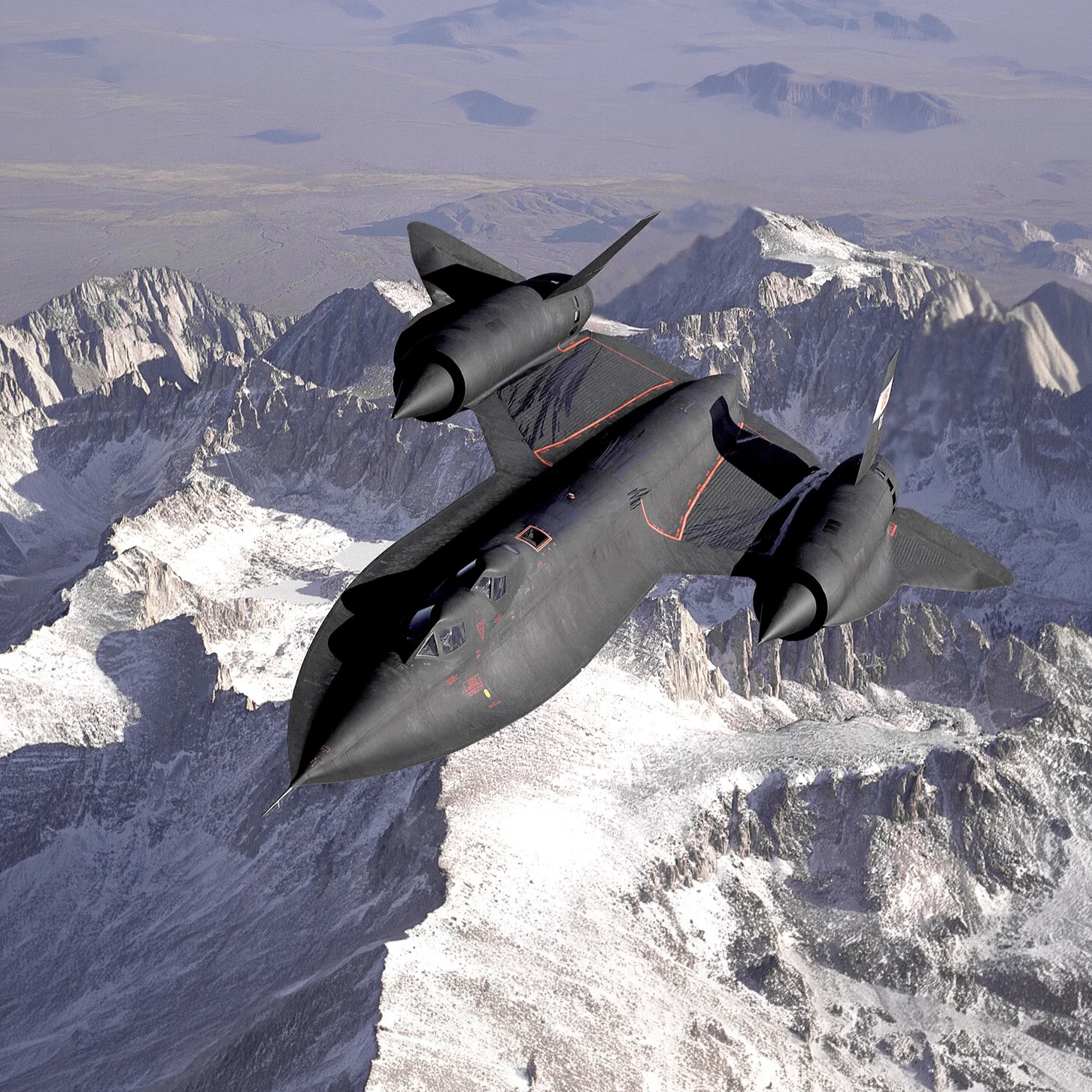
The same group went on to build the U-2 spy plane, which flew above where any Soviet missile could reach it. The SR-71 Blackbird, which sixty years after it was built still holds the world record for the fastest manned air-breathing aircraft ever flown. The F-117 Nighthawk, the first operational stealth fighter. Inside one of the largest defense contractors on earth, Kelly Johnson built a place that operated like a startup and produced impossible things.
Bennis and Biederman's deeper argument is that the most important thing Johnson built was not any of those airplanes. It was Skunk Works itself. Small empowered teams. Streamlined processes. A handshake in place of a contract. A countdown calendar on the wall reading, "Our Days Are Numbered." A culture willing to attempt what had not been done before. The organization came before the airplane.
Endless has enough going on in its ecosystem that I can no longer manage any given initiative with the depth required to ensure its success. Back in the days of Endless OS we had so many parallel initiatives that all depended on each other. We needed everything to work for the whole to work. They didn’t work. I couldn’t manage them all. Over the past decade I have shifted my strategy entirely. Rather than try to run one big bet on a set of cascading miracles that all have to succeed, we run multiple teams in parallel. Each is self-contained. Each is pointed at a hard problem, with the autonomy of a startup and the leverage of an ecosystem behind it. My role shifted with it, from operator to orchestrator.
The Keiretsu
The structure has a name I discovered later on. I was describing the Honeycomb structure and someone said, “so it’s like a keiretsu.” “A what?” I asked.
In Japan, the post-war reconstruction produced a business form called the keiretsu. Mitsubishi. Mitsui. Sumitomo. Federations of independent companies bound together by cross-investments and mutual loyalty. A bank, a trading house, a manufacturer, a shipping line. They were legally separate, holding small stakes in one another, and defaulting to one another as partners. They weren’t a single company, nor a holding company. They were a network of companies that held hands. That is what Endless is.
Take two entities in our ecosystem. We have backed a game studio building games for young people. We are also backing a company that distributes across emerging markets. On paper, they are separate investments in separate sectors with separate financial logics. In practice, they hold hands. The distribution company gets educational games to the next billion people. Each is stronger because the other exists. Neither is doing what they could do together.
That is the keiretsu in motion.
I used to think the answer was a better plan and harder work. Then I learned the hard way that a plan complex enough to solve a billion-person problem is too complex to execute. The answer was not a better master plan. It was a better organism.
This is what Endless has become: not a company, not a foundation, not a fund, and not a collection of tools or programs, but all of them. A honeycomb of skunk works. A designed environment for Great Groups. Each cell is small enough to move fast. Each team is autonomous enough to discover what I could never centrally design. Each one connected to the same mission: helping a billion young people become creators of technology, not merely consumers of it.
My role, meanwhile, has evolved from operator to orchestrator. Life is much better. This structure made everything possible.