The Community Game
Argues that the next great games will be built by swarms rather than studios, with a small core team holding the vision and a global community building the surfaces, and shows how this model is also a generational learning vehicle.
Published July 4, 2026
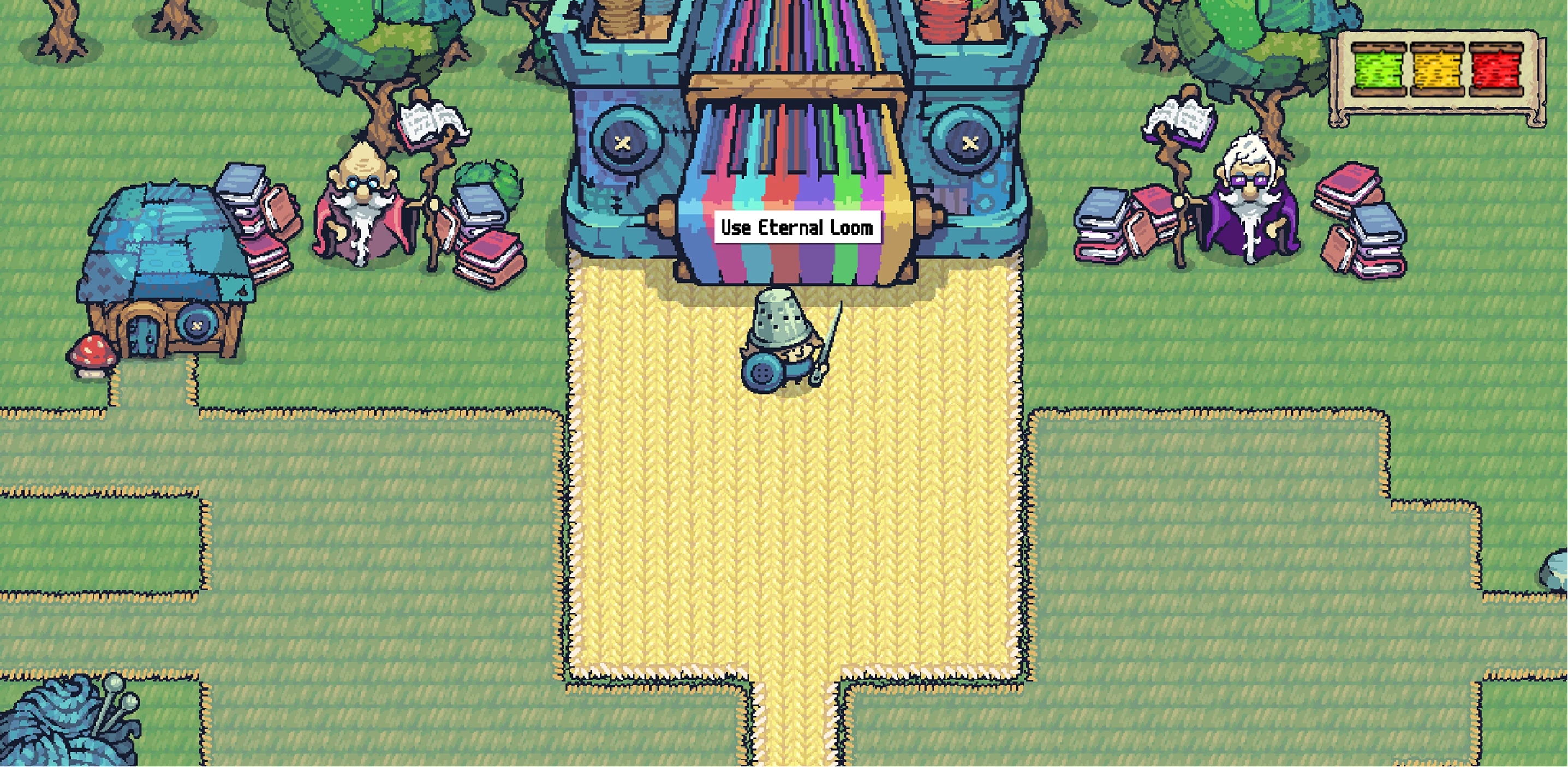
Think about the power of swarms. Swarms of bees pollinated almost every flower in the world. Killer bees can take down mammals. Ants move more earth than every human excavator combined. Wikipedia rendered Encyclopedia Britannica irrelevant.
All thanks to swarms.
Today's software is built through massive, swarm-like collaboration. Open source software sits at the heart of 97% of running software. Google has more than 2 billion lines of code powering everything from Search to Maps, Docs, Gmail and YouTube. Amazingly, they all live in a single code repository, accessible to every one of Google's 60,000 engineers. Indian outsourcing firms like Infosys and Tata take massive projects and break them down into tiny units so that their 900,000 employees, collectively, can contribute to them. In GitHub, developers made 5.2 billion contributions to more than 500 million projects. The software that powers our lives is built by massive collaboration.
What if you pointed swarms at making games? This isn't an idle thought experiment. I believe it could unlock revolutionary possibilities in game development and education.
First, in game development: through collaborative creation, we can build amazing games that would never get funded through traditional means. Great creative indie teams often struggle to match the production values of AAA titles because they lack the budgets. That’s if they can even get the funding at all. What if they could harness the collective creativity and energy of their loyal following instead of requiring massive budgets? They could then build games that wouldn’t be possible even with budgets. Just like open source software.
Second, in education: by harnessing the enthusiasm for game creation, we can bring millions of youth into the process of building large real world software projects. If modern software is already built through distributed, modular collaboration, then game creation gives young people a joyful on-ramp into the same kind of work: contributing levels, features, art, code, stories, systems, and fixes to projects larger than themselves.
None of this is a leap. It's what already happens on GitHub every day, made systematic and wrapped in an educational experience around game-making. Let me show you what it looks like.
Let's Build This World Together
A traditional game studio is a fortress. A team of professionals inside, everyone else outside. The fortress decides what gets made, when it ships, and who gets to touch it.
A community-built game inverts that. Imagine walking into a studio. A few professionals sit at the center, holding the vision. Around them, in concentric rings, are hundreds of contributors. Some are students learning their first tool. Some are seasoned artists from across the world. Some are players who became creators because they couldn't stop thinking about the game. Everyone is working on the same thing.
Open source works like this. A small core team holds the project's vision and standards. A much larger community contributes code, finds bugs, writes documentation, ports the project to new platforms, translates it into new languages. The core team reviews and accepts. The community grows the project beyond what the core team could ever build alone. Linux runs the internet because of this. Wikipedia replaced Britannica because of it.
A game has more surfaces than a piece of software. Code, yes. But also story, art, music, levels, dialogue, voice, animation, translation, marketing, playtesting, data analysis. Each surface is a place where someone can contribute. Writers craft lore. Artists design characters and wardrobes. Musicians score scenes. Voice actors give NPCs their voices. Coders build mechanics. Animators bring characters to life. Translators adapt the game so it feels native in every language. Marketers make trailers and videos that pull players in. And studio professionals at the center review every contribution against the vision: accept it, reject it, edit it, or send it back with notes.
Meanwhile, contributors learn while they create. Community hubs offer tutorials on game mechanics, storytelling, and programming basics. You learn the craft by doing the craft, alongside people who already know how. You're not just building a game. You're building a skill set that prepares you for a future in tech.
The economics shift. A game concept that could cost tens of millions of dollars to build is suddenly possible. But beyond being possible, it's better.
Swarms provide instant feedback. A large and diverse group of young creators playtests each other's work, and what's broken surfaces fast. Swarms share knowledge. Creators learn from each other, and the craft compounds across the community rather than staying locked inside a single studio. Swarms innovate. The more minds on a problem, the more likely someone tries the weird thing that turns out to work. And the more backgrounds at the table, the more the game feels alive in more places, to more people.
This is the model. It is not ours. It belongs to whoever builds with it. We are starting, but our goal is to spark many more. Every student with a prototype on their laptop should know that they can rally a community around it. Every indie team that can't get funding should know that the budget was never the only constraint. The constraint was the model.
What We're Building
We're building many games this way. Each one represents a different rung of contribution. Here are three flagship examples. Come, join our games.
The Endless Express
The first is The Endless Express. Picture a world of mystical landscapes and intriguing characters, where mastering languages unlocks your powers. You navigate this world in French, Spanish, Japanese, or even Swahili. Mastering a new language is the key to unlocking magical powers, solving mysteries, and orchestrating your way to victory.
The game's storyline and gameplay keep you coming back, turning dreaded language practice into an adventure you won't want to end. We harness the power of advanced language models to make our NPCs (non-player characters) as conversational as a human, offering you real practice in context. Haggle with a shopkeeper to get a discount, or befriend them to unlock a secret weapon. Fight a sentry, or convince them in their own language to fight the boss alongside you. Plumb the local tavern keeper for information. Eavesdrop on a conversation in a market square and pick up the rumor that changes your quest. Every interaction is real practice, and real practice is the game. Think Duolingo, except as immersive as Breath of the Wild and as cozy as Animal Crossing.
Building a game like this at the level of polish that consumers expect of games could cost tens of millions of dollars. It would require hundreds if not thousands of hours of gameplay. That's a massive endeavor. Good luck getting that investment.
So we're building it in a community. The game is built with Endstar, which makes contributions radically accessible. Placing blocks is enough to build a level. A community of millions of players can easily become thousands of levels. Every level, every quest, every dialogue, every cultural adaptation is an opening for someone to contribute. The game grows as the swarm grows. Which brings in more players.
Neighborhoods
Then there's Neighborhoods, a cozy city-building simulation game. It’s a new urbanist’s dream, somewhere in between SimCity and The Sims, where you bring blighted neighborhoods back to life, built around handcrafted found-object claymation aesthetics, humor, and collaborative world creation.
We've architected it to be approachable for college students. Students join a real studio workflow, take real tasks through GitHub, and have a real shot at seeing their work in the shipped game. They contribute buildings, automobiles, characters, animations, and engineer systems. Accepted work earns project credit. They build portfolio pieces and gain production experience. And it counts for college credit. When we announced the first pilot course, our student roster was full within hours.
Endstar
Then there's Endstar, the platform itself. Endstar is the 3D multiplayer engine on which many of our games run. It is a layered UGC platform for building and playing. It is a hard codebase. That's precisely its beautiful thing. For those who have leveled up and are truly sophisticated, who want to understand what it's like to work on production multiplayer code on a layered UGC engine, come. We have a place for you to contribute. There is no ceiling in the skills that Endstar can teach you. If The Endless Express is the kiddy pool, Endstar is the open ocean, ready for anyone who wants to try and swim with the pros.
Endlessly Built Games
The three together describe a full ladder: from placing blocks to building an engine. But there are more. I have a folder of these game ideas. Most will never be built by Endless. They will only ever happen when swarms come and pick them up.
Hive Wars is a multiplayer battle arena game where players command insects with unique abilities. To build it, you'd need thousands of insect models. Thousands of arena concepts. Stats coded for every insect class. Animations. Art. All community crafted.
Heart of Porcelain is a game where you traverse a blue Japanese porcelain world to fight the emotions that broke your heart. You collect the shards, and you put them back together with kintsugi, the Japanese art of repairing pottery with gold lacquer. To build it, you'd need an entire porcelain world rendered shard by shard.
A Dream Shooter is, literally, a game I saw in a dream. A Battle Royale across vertically stacked floating levels, where the levels disintegrate as you play, and sound shows you where people are running, bouncing and jumping up and down the levels. To build it, you'd need a whole new physics of disintegration and a whole new vocabulary of sound design.
And these are just some of the games that I want to build. All of these will only ever happen when swarms come and make them happen.
We are also working with other studios to build even more games into this community process. Frankly, we think that we can make a lot of money doing it, and teach a lot of kids.
The Plight of the Game Industry
I recently toured a showcase of student game projects, and was blown away. The room was electric with creativity. Each screen a window into someone's imagination made real. One game in particular lodged itself in my mind: an evocative puzzle game that danced with the shapes of shadows, turning simple light and dark into poetry in motion. There were pockets of pure creative risk-taking, fresh ideas in an industry often dominated by conservative, big-budget productions. But as I talked with these young creators, a classic, painful pattern emerged. They'd poured months, even years, into their games. They'd sacrificed countless nights. Their passion was palpable. Their talent was obvious. And yet almost none of these games will ever reach their full potential. Why? The math.
In 2025, 150,000 games launched in the Play Store. The top 1% of games earn about 95% of all revenue. The remaining 5% is split between all the other game developers. About half of Steam’s new releases have fewer than 10 reviews. 25% of Steam games didn't earn back the $100 publishing fee. Indie studios face this wall. Student teams face it even worse. They're almost certainly not going to get investment. So they take contract work if they are both good and persistent, or they give up and get jobs, and their games stay forever unrealized.
The community model is a way through. Imagine that student team with the dancing shadows opening their game to contributors. One person codes a new mechanic. Another models environmental assets. A third refines the animations. Players become contributors. What started as a class project becomes a collaborative masterpiece, and the original team holds the creative vision throughout, the way any studio's leadership does.
But there's a second thing happening here, and it might matter even more than the production gain. Modern games succeed as much through awareness as through quality. The App Store is full of polished games no one ever heard of. The fastest path to awareness is community. And the best way to build a community is to invite people into the game's creation, not just its consumption. Rust did this. Players watched the game get built in real time, argued about features, suggested mechanics, made content, and turned themselves into the marketing engine that powered the game to massive success. The community wasn't a side benefit of the production model. The community was the launch.
Community contribution is two things at once. It's how you build a game you couldn't otherwise afford to build. And it's how the world finds out the game exists. Both birds, one model. That's why we're starting. And that's why we hope it spreads. Every student with a prototype on their laptop should know they can rally a community around it. Every indie team that can't get funding should know the constraint wasn’t the budget. It was the model. Welcome in a community and you might find a way to make your game visible, and viable.
The Hallway to My Heart
What does it feel like to walk through this door? I asked ChatGPT to show me the process in a story. I want to share it, because it depicts what we are aspiring to better than I ever will.
I used to think "real games" were made in a glass building somewhere far away by people who slept under their desks. My room was a tangle of controller cables and good intentions. I watched devlogs the way other kids watched sports highlights. I could tell you the Easter eggs in Hollow Knight, name shaders like celebrities, and still, every time I opened Unity, I froze.
Then my teacher forwarded a link: Contribute a tiny quest to a real studio project. No experience required. Tiny quest. Real studio. Both parts sounded like a trick.
The task board lived online: issues labeled Bite-Size, Snack, Meal. "Fix NPC pathing in the desert camp." "Write 3 alt barks for the fishmonger." "Graybox a canyon with two traversal routes." I picked the fishmonger barks because it felt least fake. People talk. I can write people.
Two hours later I had twelve lines. Some funny, some bad, one good. I pasted them in, hit submit, and braced for silence. An hour after school, I got a ping:
"Nice voice! Keep #3 and #7. Try one where she's pretending not to be offended, and one where she is." —Ari, Narrative Lead
Ari had a little comet emoji next to their name. The comet was for mentors. I didn't know the rules yet, so I rewrote fast. Ari replied with line edits and a note about "beats" and "constraints" and "the fishmonger can never actually leave the stall." It felt like opening a door in a hallway I didn't know existed.
The next week, my lines showed up in a build video. The fishmonger, my fishmonger, huffed at a customer and then muttered the alt line I wrote when the player walked away. It was two seconds long. I replayed it twenty times.
I started taking "Snack" tasks: add collision to crates, tag a few audio cues, sift through bug reports for reproducible steps. It was not glamorous. It was also, secretly, the best part of my day. I learned to write commit messages like tiny haikus. I learned that "blocked" wasn't failure. It was a signal to ask for help. I learned how it felt to ship something small, and then something a little bigger, and then something with my name on it in the credits. Buried in a long list, but there.
Ari asked if I wanted to join a Saturday "writers' room." There were six of us: a college kid, two high schoolers, a QA tester learning narrative, a teacher, and Ari. We argued about whether the caravan leader should be kind or competent. Ari taught us to hold ideas lightly and characters tightly. We wrote a quest called Water Under Sand about repairing a busted well by convincing three stubborn neighbors to share parts. It sounds simple. It was not simple. It was diplomacy, logic puzzles, and three rewrites after playtesters speed-ran it in a way that broke our triggers.
When Water Under Sand went live in the alpha, players posted screenshots of the moment the well sputtered back to life. Someone said, "This quest made me call my dad." We put that one in the team chat and just stared at it for a minute.
My parents started asking different questions. Not "How was school?" but "What did your team ship?" I stopped dreading group projects in class because I had tasted a team that worked. At night, I reread the pull request reviews Ari left for me for fun. I started leaving reviews for others, too. Tentative at first, then clearer: "I think the third line undercuts the stakes; what if she dodges instead of jokes?"
Launch day wasn't fireworks. It was a quiet, sticky joy. The Discord filled with fan art and bug reports and people who said, "This part felt like my neighborhood." I went for a walk and caught myself narrating the scene like a devlog: "We shipped. We learned. Next patch: make the well overflow if you bring extra parts." I thought about the kid who used to freeze at a blank scene and realized, somewhere along the way, I'd stopped trying to be a genius and started becoming a contributor.
I still have the comet emoji Ari gave me the day I wrote my first good line. Sometimes I forget it's there. Then a new student DMs me a draft and asks, "Is this anything?" and I hear myself saying Ari's words back to them: "Keep #3 and #7. Try one where she's pretending not to be offended, and one where she is." The hallway door opens for someone else.
I think that's the fruit. Not just the game. The hallway.
I got tears in my eyes when I reread that. It is exactly what I dream of. Imagine millions of these experiences. Imagine what they could build. Imagine what they would learn.