The Skill Curve To Professional
Introduces the S-curve from novice to professional and the five overlapping phases (passion, handholding, making, leadership, professional apprenticeship) that an educational journey has to support, end to end.
Published July 4, 2026
PRINCIPLE: Learning journeys must provide support at each stage of development.
The path to becoming a professional is a long one. Regardless of how arduous and harrowing that journey is, people need the motivation to keep going and – at every step of the way – to see a path that lets them keep going. How many careers have been curtailed by someone believing early on that they didn't have what it takes because they encountered a small challenge along the way? How many young girls have had a little taunt or a hard test in school scare them from math or the sciences? The earlier those challenges happen, the less confidence someone has in their ability to surmount them, the easier they give up. But every stage must have its hope.
Perhaps the greatest challenge with learning hard skills is that the learning curve is so darn steep, with so many mini cliffs along the way. Like in the real world, it's not the height of a mountain that makes something hard to climb - it's how steep it is. Half Dome in Yosemite is taller than El Capitan and yet a steady flow of 50,000 people a year summit Half Dome because it's a light day hike. Meanwhile, the sheer face of its neighbor, El Capitan, makes Free Solo a best-selling movie when Alex Honnold summits it without a rope.
The same challenge exists along an educational journey, and we as educators need to support every step of the learning process. Every step of the way needs to feel surmountable. This is especially true for the so-called "hard" disciplines because they are so scary to so many.
The diagram of an S-curve to visualize the evolutionary journey from novice to professional has helped me map my own understanding of this journey. At the bottom left, we have the newborn child, born fresh into a bright and buzzing world. At the top right, we have the advanced professional at the peak of a career. Our job as educators is to get that newborn to get a job. Every step along that curve is important because every part of the journey is full of reasons to get disheartened, to give up and to drop out, whether literally or simply in giving up on what could have been an incredibly fulfilling career.
I like to think of the curve in five phases. Each phase has its own challenges and goals, and therefore its own solutions. Like germinating a seed, shielding a seedling, and scaffolding a sapling, we must be deliberate about what each phase needs.
Here's the secret though: these phases are actually all manifestations of the same thing. They all take place within a community where people build together. Whether you're in early guided learning, creating your own games, leading a team, or contributing to professional projects - these opportunities coexist in a vibrant ecosystem. The journey isn't linear but interconnected, with multiple paths available simultaneously as you grow. In some sense, the journey is one.
Phase 1: A Lot of Passion
So much of school is driven by extrinsic motivation. I need to get good grades to get into a good school. Or because my parents got upset about my report card. Or because one day it may shape my life outcomes.
But we live with this strange duality that this is what we use to motivate kids, and yet we know that kids are not motivated by extrinsic motivation nearly as powerfully as they are by intrinsic motivation. There are really only so many kids who are motivated by those extrinsic motivations, or who have parents who care enough to drive that motivation for them.
My own story illustrates this duality. I remember having mediocre grades when my mom had her cancer scare. My dad made a promise to God if my mom survived. He wanted each of us kids to make a promise too. I remember exactly what mine was. My dad wanted me to promise that I would get high honors. The memory of that argument is ingrained in my brain. I didn't think I could do it. I remember getting out of the car and running into the woods. But I did end up getting high honors. That hustle became ingrained in who I was, and I graduated with the highest grades in my school senior year, got into Harvard, and that unlocked every experience that has now made me who I am. That moment in the woods was a turning point in my life. Most kids aren't lucky enough to have parents who will quite literally fight for their future.
There's another way. Ironically, it’s the path that set my dad's life in motion: passion. My dad was pretty much a high school dropout. He would play hooky to surf on Long Island's beaches. He hated all the rote memorization. He got into a mediocre college, and then it all changed. He felt agency there. He could choose courses that he loved and he loved the more open-ended nature of the coursework. His passion drove performance. That got him into Harvard Business School. I far prefer his path to Harvard than mine.
The second spark that drove his life actually happened earlier, when he was 12 years old and working as a caddy. He took his earnings and put them into the one stock he could afford, multiplying his money by sheer chance. That little stock bet spawned all his later success because it sparked a fire of passion in Little Ray. Passion gets you a long way.
So phase one is really about making someone sparkle with passion, dazzled by the possibilities. Why do we at Endless use games to teach? Because they enrapture youth.
If I were to overlap a funnel on top of the S-curve, the beginning would be the widest part. It needs to capture as many people as possible. In a dream world, it engages every kid, giving them all hope of climbing to the promised land of being a professional.
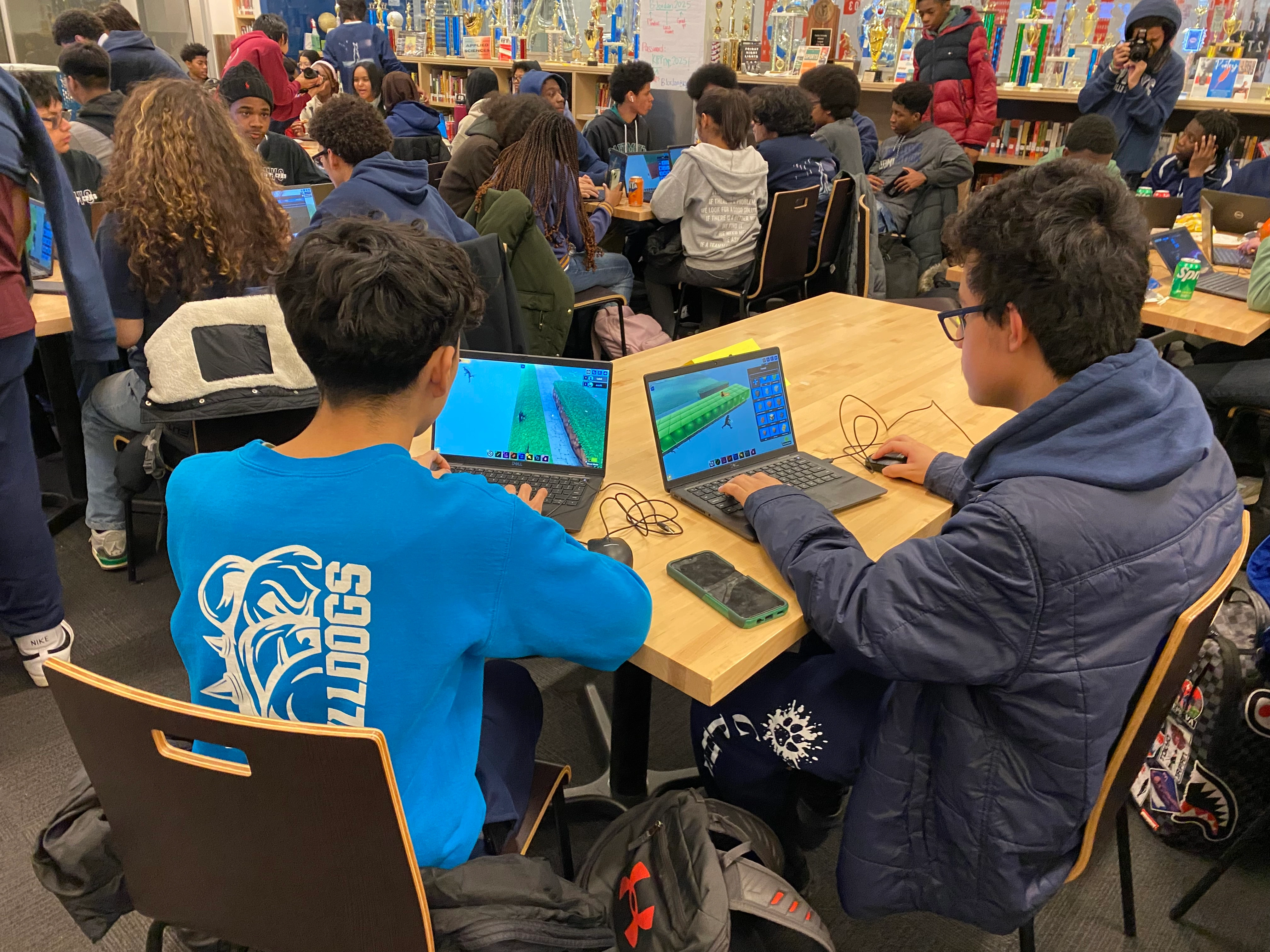
I'm reminded of visiting a KIPP program in the Bronx. The teachers pulled me aside in the hallway to tell me about one student: "He struggles from 8:00 a.m. to 4:00 every single day of his life in school." This was the first time they had seen him come alive and feel successful. I'm also reminded of the Emirati girl who followed her passion for art into one of our programs and discovered she needed to code to do what she wanted. That set her on a path to discovering she loved coding. Each got hooked by that little kiss of temptation, like a bee to a flower. Something alluring made them want to step in, and then they discovered they liked it.
Phase 2: A Little Handholding
I remember walking into that KIPP classroom a year later. The kids were talking about what they had built in our game-making tool that scaffolds into Unity. They had made a bridge with spike traps that rolled in successive waves - a rolling pulse of spikes that the player had to run across in perfect timing. I stood there puzzled: how did they build this in our tool? I didn't even know it was possible. When I asked, they simply pointed to their friend and said "he taught me."
Kids are eager to learn when they want to know what they're being taught. As Mike on our team often says, the key is generating that "need to know" deep inside a student. When that need - that craving - is there, they become willing receptacles ready to be guided.
At this phase, they often don't even know where to begin. A little structure helps. I have a writing course to thank for all my writings. I got to a point where I needed to write but didn't have enough structure to succeed on my own. I needed handholding, best practices, someone to show me the way. Like those kids eager to learn how to build what they envisioned, I needed that guidance.
The same is true for kids learning anything, especially something as complicated as technology. The tools can be complicated (it helps when they automatically scaffold the student, but we'll discuss that later). Students may not know which tools to start with, which buttons to press, how to get from the tool to their vision - to a product. This is when "courses" become valuable.
We don't call them "courses" - that word brings to mind lengthy lectures and theoretical content taught "just-in-case." Instead, we run focused programs and bootcamps that teach skills "just-in-time," when students need them. These are structured moments when learners are ready to be guided, kept as brief as possible to get them creating quickly.
Phase 3: Make!
At Endless, we call this "The Center Circle" both because it's the middle phase of the S-curve and because it's the heart of everything. Like GitHub, it's a community space where people can create, practice, and build their dreams alongside others with complementary skills.
What makes this work:
- Real projects with real stakes
- Mixed skill levels working together
- Clear paths to advance (from simple contributions to leading projects)
- Professional mentorship
- Both structured support and creative freedom
This is Endless Studios. When I say people build "together," I don't mean like kids in Minecraft building separate projects in the same space. I mean true collaboration on ambitious projects that can grow in scope and scale. These projects merit professional involvement, creating opportunities for novices and experts to work side-by-side. A beginner might learn just by watching someone further along the S-curve implement a complex feature.
The community supports both large collaborative projects and smaller individual ones. At a recent game jam, I watched this in action. Four girls started with a game idea on day one. The next day, they brought four friends to join them. The new team's animator brought such fresh ideas that she organically became their lead designer. She later joined our summer programs and is now a fixture at UAE game jams. At the same time, we are also building games with massive visions that can allow thousands of people to collaborate on epic projects.
This environment for growth - whether in physical game jams or our online community - is where students get the essential practice they need. In fact, this phase is almost the entire learning journey. Like open source communities, people can spend years here, building what they dream of - whether that's level design, music, art assets, code, or project management. Every contribution is a learning opportunity.
This mirrors how real software development works - teams form and grow organically, people join projects that excite them, and everyone learns by doing meaningful work alongside more experienced peers. As educators, our role isn't to simulate this environment but to give students authentic access to it. When we create spaces where students can experience real workforce practices, tackle real challenges, and see their work make real impact, we're not just teaching - we're inducting them into the professional world they'll soon join. Like the working world, the more of it they get, the more prepared they will be for the jobs ahead of them.
I often use the sports analogy: the best players in the world practice on the same court where they first started. What changes is the hours of practice: how many free throws they've taken, plays they've run, dribbling drills they've completed. Every hour of practice makes them better, and years of dedicated practice on that court can lead to the pros.
That's how I see the Center Circle. It's the court. You can play, practice, and master your craft.
Phase 4: Become The Leader
When I was in my teens, every member of our family had to go on Outward Bound - a month in the wilderness. I loved it so much that I did another more challenging version called NOLS, the National Outdoor Leadership School. For weeks, they teach you wilderness survival, adventuring, and living as a team in the vast wilderness. First through formal lectures, then through real challenges - and there were plenty of those in the wilderness. The instructors guide you through each one.
Then comes the crucial moment: you're ready to go solo. Students vote in leaders for each squad, and those squads head into the wilderness alone. I remember looking at my team, feeling the weight of responsibility for these lives literally entrusted to me. That leadership position taught me things I could only learn by being at the helm.
The same holds true across every domain. Practice feels fundamentally different when you're captaining the ship. Everyone needs experience at the helm, even of a small vessel, to better serve on larger crews later.
One of the most valuable traits employers seek - it's really more of a trait than a skill - is goal-directed autonomy. Someone you can give a goal to who will deliver it. "Barrels rather than ammunition," as Keith Rabois puts it. Point them and they'll fire. That autonomy only comes through experience. I was blessed to have this early, starting the China Care Foundation as a kid. I had to dream up the vision and figure out how to make it happen. That experience was my version of this phase - being the leader, choosing which goals to chase and finding ways to reach them.
Most people don't lead major projects until late in their careers. They climb the ranks following others' marching orders for decades, then suddenly they're expected to lead. How can we expect people to become good leaders this way?
We must give youth safe opportunities to lead when they're young, with all the daily challenges unique to helming their own projects. From my perspective, only then is someone truly ready to be led to greatness.
Phase 5: Enter The Professionals
Traditional internships have a fundamental flaw. They're time-bound windows of opportunity that are hard to access. Imagine, instead, a persistent professional environment where students can contribute at any level, from small project tasks to full development roles.
Like open-source software where contributors range from occasional bug fixers to core developers, they have fluid pathways into professional practice. In the game world, a student might start by designing a single game level, graduate to implementing core features, and eventually join the professional team - all while learning at their own pace.
This isn't theoretical - professional studios are already working within our ecosystem. We have multiple teams being built this way, by multiple professional game studios. The studios get access to emerging talent and enthusiastic contributors, while students get real-world experience and portfolio pieces. Some contributors might spend an hour a week, others might dive deep, prove their worth and graduate into full-time roles, as many have with us. The key is that the opportunity is always there, accessible to anyone willing to put in the work. This final phase completes the cycle - from learning through games, to making games, to working professionally in games. It's not just preparation for the industry; it's a natural bridge into it.