Realm 5
Introduces Michael Crow's five Realms of education and aims the book at Realm 5: a learning system that scales infinitely, engages deeply, adapts personally, and integrates with industry.
Published June 11, 2026
PRINCIPLE: We must design learning systems that scale infinitely, engage deeply, adapt personally, and empower universally, rather than retrofitting traditional models.
Michael Crow’s vision of how you grow access to education is based on a vision of what he describes as the five Realms of education.
Realm 1 is traditional brick and mortar education. Let’s call that The Harvard Education. This is based on the old Bologna University / UK college system. Oxford was founded in 1096. Its vision of how you educate young men was imported to Harvard Yard in 1636. It was based on an era when you had to go to a campus to interface with your professors, where most students were the sons of the elites, when the question was how to educate an American aristocracy. It was designed in a pre-digital era, when the tools to teach with technology did not exist, and when the need to educate youth in how to use technology did not exist. Society has evolved.
The knowledge worker - especially those involved in software - now drives the majority of the value in our economy. We value social mobility both because it is a marker of a healthy social fabric and because it is the source of a vibrant country. The skills that we need to learn have changed from mastering classical education—such as Latin, philosophy, theology, and rhetoric—that would prepare a Harvard student in the 1700s to enter elite professions like law, ministry, or academia, to the technical, creative, and adaptive skills that Silicon Valley now prizes: coding, data analysis, design thinking, and agile problem-solving. These modern skills are seen as the key to thriving in a rapidly evolving, technology-driven economy, where the ability to innovate and iterate is valued over memorization of classical knowledge.
Of course, the tools we use to teach have also transformed dramatically. From the brick and ivy-lined classrooms of Harvard and Yale, we've advanced to Zoom, YouTube, adaptive learning platforms, and, most recently, LLMs that hold the sum of human knowledge in floating points, engaging learners directly as if they were interacting with the world’s greatest professors.
Today, we have cinematic-quality videos, interviews with the brightest minds on any subject, powerful visualization software and animations that bring complex concepts to life, video games that immerse students in interactive simulations, virtual reality that transports learners across time and space, and the very same cutting-edge software tools used by the world’s top knowledge workers are now accessible to anyone with a computer. And we have vast communities of networked learners and creators working together to build real things together.
If we take these incredible tools one step towards the future, we get to Michael Crow’s Realm 2. Realm 2 is online and technology enhanced, but I like to think of it as the traditional MOOC model of online learning. It’s a good step forward, but it leaves a lot to be desired.
Leaping forward, we have Realm 5, the stuff of sci-fi. Realm 5 learning scales to accommodate an unlimited number of learners. It provides rich, immersive, engaging learning experiences. It adapts to each learner's individual needs, pace, and style. It can offer continuous, lifelong learning opportunities. It integrates seamlessly with industry. And it ensures accessibility and inclusion on a global scale. It is an educational experience that looks like the best of what we can have today, and the best of what technology can make possible in the future.
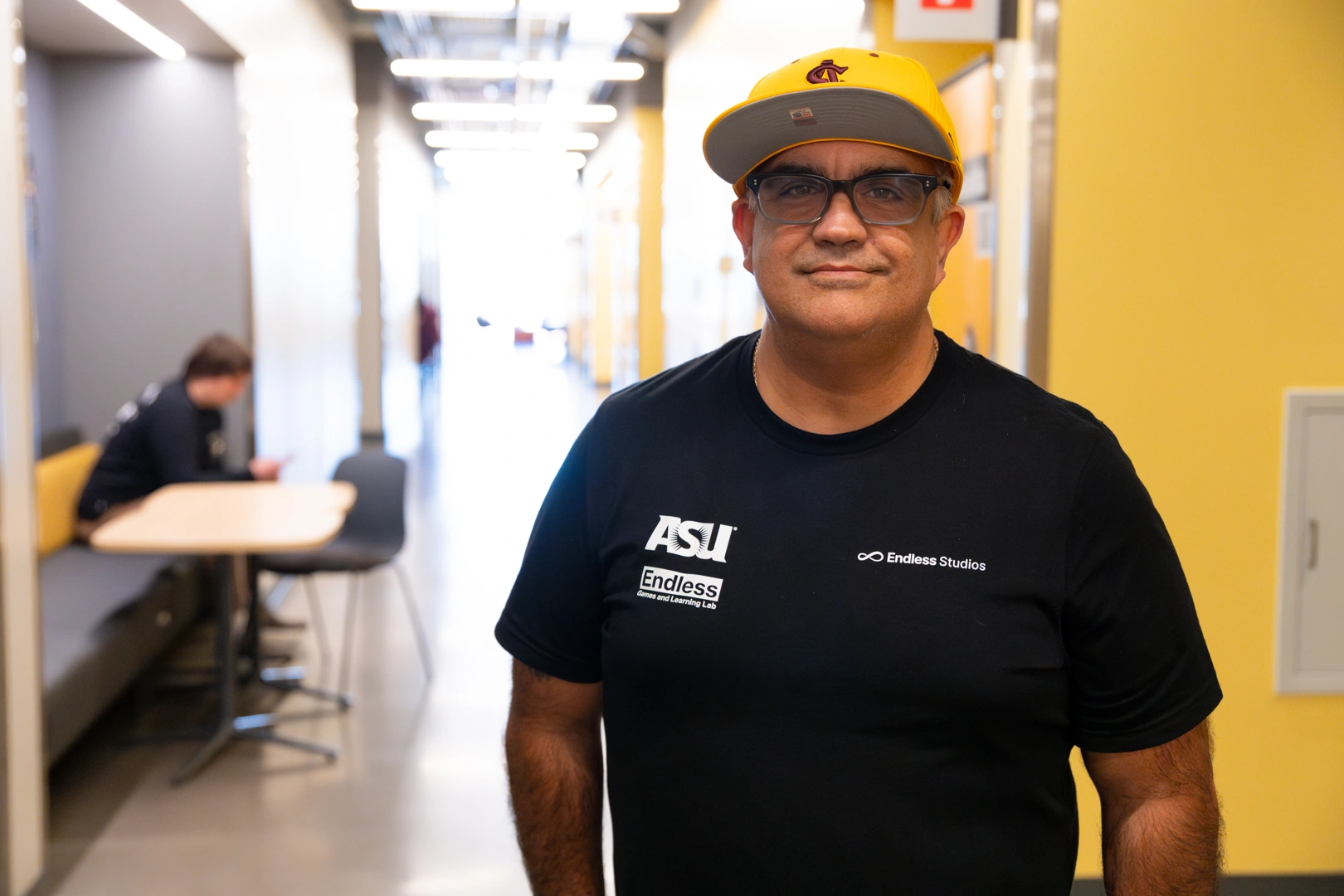
When I described what I will describe in the coming pages to Michael, his answer was, “there is only one other thing that I have ever seen that fits the vision of Realm 5. This is the second.”
![][image2]
So what is that vision? And how do we achieve Realm 5 today? As they say, “the future is already here, it’s just unevenly distributed,” and “the best way to predict the future is to invent it.” The capabilities of the future are already here. We just have to configure them to make it so that Realm 5 education is accessible to everyone.
The future of education is not just about opening wider doors to what already exists. It’s an opportunity to reimagine education, not as a filter but as a catalyst. Not as a gatekeeper, but as a launchpad. In a world facing unprecedented challenges, we need all the bright minds we can get. And who knows? The next world-changing idea might just come from that kid who, in our current system, never would have made it past the admissions office.
Ok, so how do you do that? Let’s dig in.