The Race
Frames the central wager of the book: how fast AI propagates through society versus how fast humans become fluent enough to wield it, and argues that the race is winnable.
Published March 26, 2026
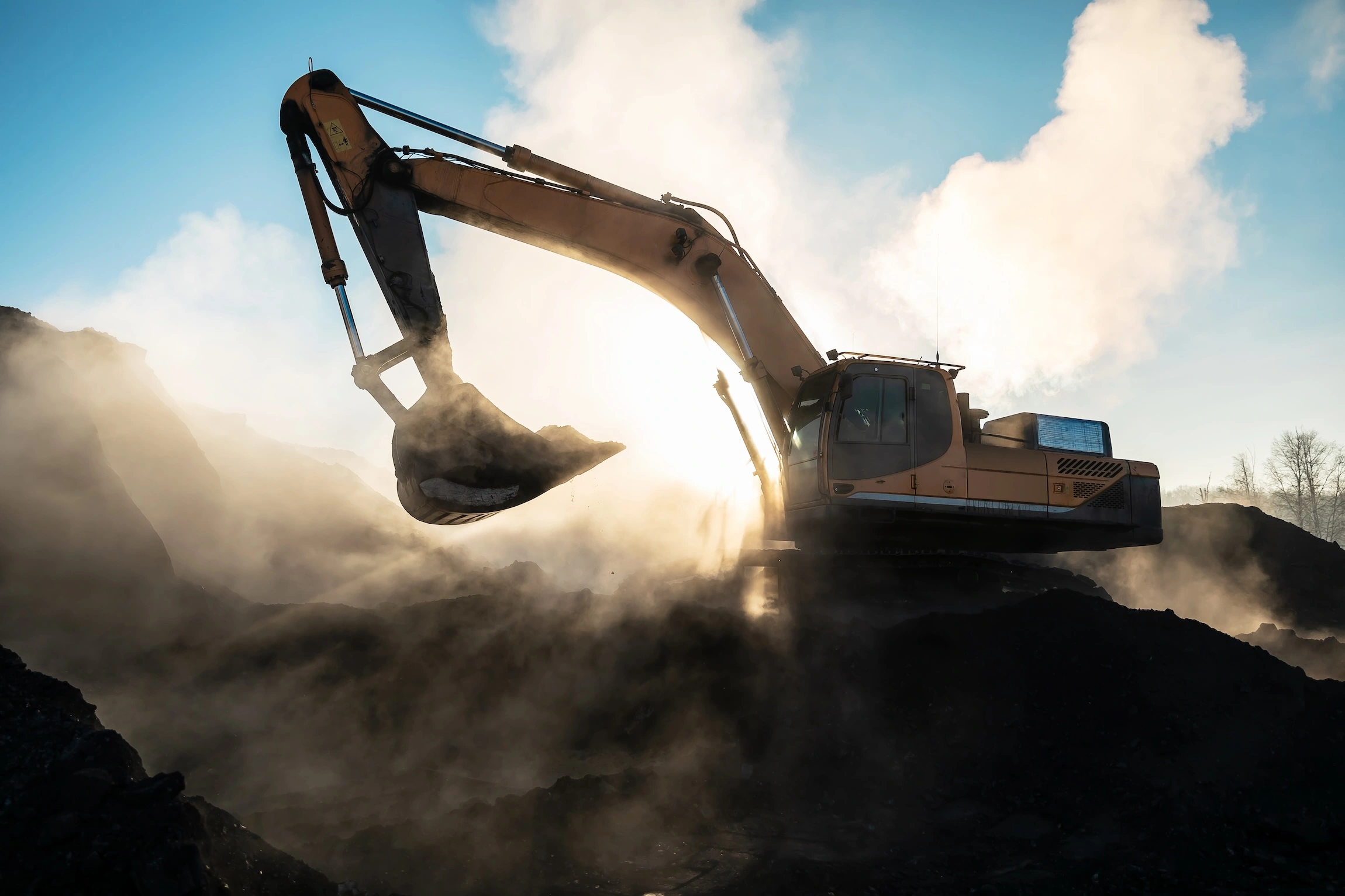
"Faster!" cried Mr Fox. "Don't stop! Dig, dig, dig!"
— Roald Dahl, Fantastic Mr Fox
The last chapter was a long exhale. This one is the inhale.
I wrote earlier about a thought experiment that looked at two extremes. Scenario 1: AGI arrives, and humans stay ignorant. Scenario 2: the models freeze, and humans become fluent. The experiment revealed the variable that matters most. But the scenario where the models freeze is fantasy. The models are going to get better. Fast. The real question is what happens to human intelligence, and what does it mean for humanity?
Some say AI is overblown. The productivity gains will be modest. The job apocalypse is overstated. There are entire schools of economists, journalists, and operators who believe AI will land more like the spreadsheet than like the steam engine. Useful, transformative in places, but mostly absorbed into existing workflows.
Others, often the people closest to the work, are terrified.
In June 2024, a former OpenAI researcher named Leopold Aschenbrenner published Situational Awareness: The Decade Ahead. The argument is simple and chilling. The capability curve is going up faster than the public realizes. AGI by 2027 is not a fringe possibility, it is the trendline. Once AGI arrives, the same systems get turned loose on AI research itself, compressing a decade of progress into a single year. Superintelligence follows. The economic and military advantages are decisive. Most of the world does not see it coming. In Aschenbrenner's words, "you can see the future first in San Francisco." Only a few hundred people, he estimates, have what he calls situational awareness. The rest of us are operating on outdated mental models.
Ten months later, Daniel Kokotajlo, another former OpenAI researcher, published AI 2027 with three co-authors. The piece reads like science fiction but is built from grounded trend extrapolations and tabletop exercises. It traces a specific path: superhuman coding agents by early 2027, AI doing its own AI research by mid-2027, then an intelligence explosion.
These are not outside critics. They are insiders. These are the people who have touched beneath the veneer, with their hands deep in the beating heart of the underlying technology. They feel its pulse. They are the ones who see what it can do in its most powerful forms. The people who work in the frontier labs will tell you, again and again, that some version of this view is closer to their lived experience than anything in the mainstream press.
I want to take this view seriously. Not because I know it is right. But because if it is right, the answer to what we should do about it matters more, not less.
The models keep climbing. By 2027 the most advanced systems can do almost any cognitive task a human can do, and most of them better. AI begins doing its own AI research, kicking off an intelligence explosion no one can keep up with. White-collar work gets gutted from the middle out. Junior lawyers, analysts, marketers, coders, customer service agents, even mid-career professionals find themselves replaced by systems that work around the clock for the cost of electricity. A handful of companies, and the small number of individuals who learned to wield their tools before everyone else, capture nearly all the gains.
If that is the world we are headed into, what then? Do we tell people to give up? Wait for universal basic income? Hope the people who own the models are kind? Or do we do everything we possibly can, in whatever window remains, to get as many people as possible above the wave before it crashes?
The Great Crystallization
If we upskill humanity before AI propagates and makes people's current jobs irrelevant, we get distributed leverage. Every small business has capabilities that used to require massive organizations. Every professional operates with tools that make them 10x more productive. Teachers redesign education for their students. Doctors build diagnostic tools for their patients. Farmers optimize for their precise conditions. Innovation emerges from the people embedded in the problems, not imposed from some company in San Francisco.
But if AI arrives first, before widespread human AI-fluency, we get cognitive feudalism. A world shaped by the 5-10% who learned to use the tools before everyone else. We don't have to imagine it. Look around. Billionaires build hundred-million-dollar waterfront mansions while our streets fester with fentanyl-filled men who have slammed the door on society. One in five children in New York is hungry while Wall Street rings the bell for the week's IPOs. The rungs of the economic ladder are already being kicked out. And it's picking up. As George Pu put on X, "9,000 Microsoft employees got an email at lunch today. Take the money. Go home. The safest job in tech. Gone in an afternoon. Nobody called it a firing. They called it a retirement gift. This is 2026."
So it's a race. How fast does AI propagate through society versus how fast do we educate people to wield it well enough to be unfireable?
This is the argument I will spend the rest of this book making. That the race is winnable. That humans with AI will remain more powerful than AI alone for decades, possibly forever. That the combination creates something neither can achieve alone, and that our job is to get as many people as possible into that combination before the window closes.
But let's look at the other side. Let's assume I'm wrong. Let's assume AI can eventually do everything humans can do, better, with no human input. AGI makes humans obsolete. Even then, the race still matters. In fact, it matters more. Because AGI crystallizes the economic structure that exists when it arrives. It creates a snapshot, and makes it permanent. The world AGI creates depends on the world that exists right before AGI arrives.
If people have money when that moment comes, they can afford the automation that sustains their lifestyle. They own the machines instead of being owned by them. They are the ones with the robot housekeeper. They live well on the other side.
If they're living on the streets the day before, they're living on the streets the day after. They can't afford the engines of comfort. The world looks like a place full of tattered souls.
Every year we extend the runway, we move more people from the second group to the first. Every additional year of AI-fluent employment is a year of accumulated savings, of built equity, of technology built to raise quality of life. Every year we educate is a year more people can afford to land softly when the ground shifts.
So whether I'm right that humans with AI stay ahead forever, or wrong and AGI eventually wins outright, the strategy is the same. Upskill humanity. Buy time. Use the time to upskill more. Push the moment of obsolescence further out, and make sure that when it finally arrives, the largest possible number of people are standing on solid ground.
The future is not decided only by how fast the machines improve. It is decided by how fast humans learn. This is the race. The machines are getting smarter every day. We are already running it, whether we know it or not.
Fantastic Mr Fox
Last night I read Fantastic Mr Fox to my son. We got to the chapter called The Race.
Mr Fox has been stealing chickens and ducks and turkeys from three nasty farmers, Boggis, Bunce, and Bean. The farmers stake out his hole with shotguns. When that fails, they bring in mechanical diggers and start tearing the hill apart to get at him. Mr Fox and his family are trapped underground. Their only hope is to dig faster than the machines can.
So they dig. "Faster!" cried Mr Fox. "Don't stop! Dig, dig, dig!"
Above them, the diggers roar. The earth shakes. Dust falls from the tunnel roof. The Small Foxes are panting. Mrs Fox is so exhausted she can hardly move. But Mr Fox shouts, "We must go on! We must!" And they dig. Down and down. "Their paws move so fast you can hardly see them."
The machines are bigger. The machines are stronger. The machines do not get tired. But, as I had to assure my son as I read the chapter, the foxes win against the machines. Not because they were stronger. Not because the machines slowed down. But because they understood what was at stake, and they started digging before it was too late.
![image][https://aporqokowvrdgmhmaurv.supabase.co/storage/v1/object/public/chapter-covers/content/mag-01-13-01.webp]