Living In Eden
Uses Pueblo Eden in Uruguay to remind the reader that prosperity is not only capability; community, dignity, and time with the people we love are the part of a good life that money cannot buy.
Published April 23, 2026
“Very little indeed is necessary for living a happy life.”
— Marcus Aurelius, Meditations
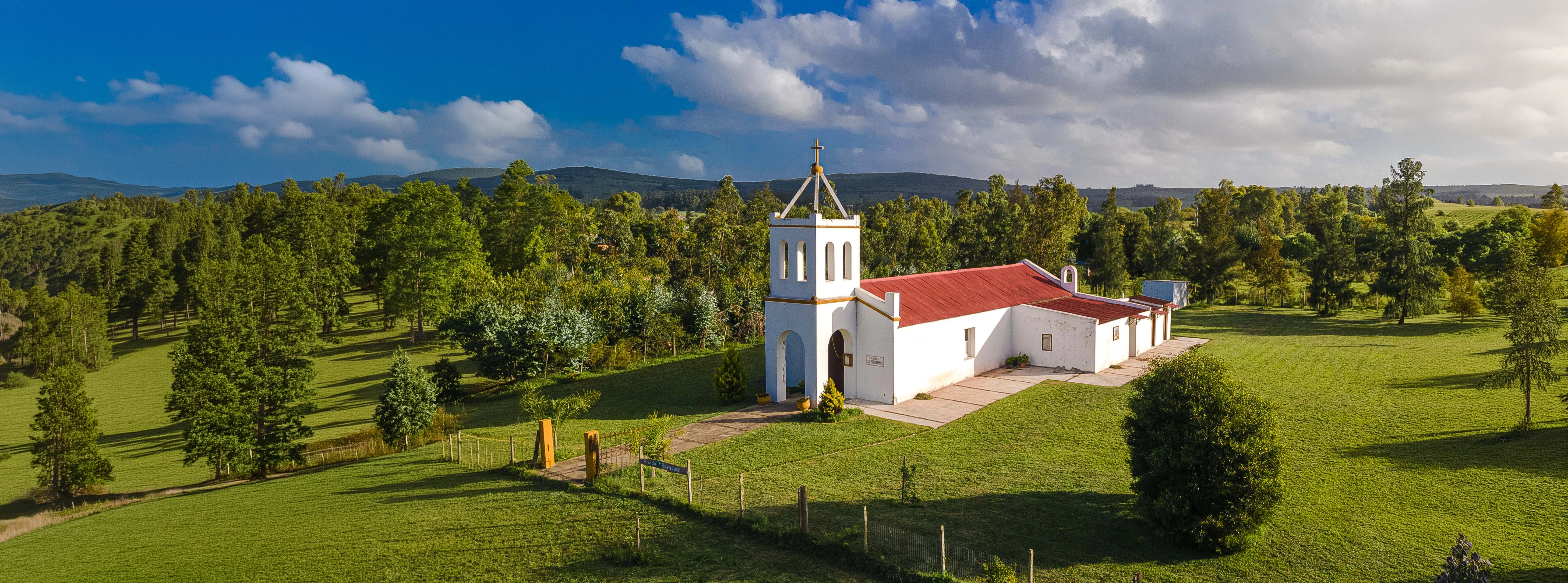
I have been to the garden of Eden. It lies an hour up Ruta 12 from Punta del Este in Uruguay, a slumbering little hamlet where someone seems to have planted a small grid of tiny houses alongside rolling grasslands.
We stumbled upon Pueblo Eden while driving to my father-in-law's farm in the hills, an idyllic place surrounded by orange flowering trees. Our kids were napping in the back of the car, and not wanting to wake them, we decided to buy ourselves time by turning into this small town. We've driven through it ever since, each time we visit.
This town represents what I imagine being possible across the hills of the entire world. To call it a town is a bit of an exaggeration. It is around 50 houses spread across about a square mile. At its center lies a town square: a large patch of grass with trees, manicured with dignity, where the grass grows a touch longer than usual, complete with a little playground and the tiny historic San Rafael Church. Everything in Eden is tiny.
It is far from a wealthy town - most people here work as housekeepers or farm workers on the neighboring farms. But there is so much dignity in this place. The houses, though tiny, are adorable: cinder blocks painted in cheerful colors, each with its own flower-filled working garden that has clearly received love. Yes, there are many gardens in Eden.
I couldn't wait to get in and talk to someone. After quietly closing the car door to let the kids sleep, I walked into a home with a chalk billboard that read "Bakery" and listed a few baked goods. Past the living room, I found a tiny room with a big wood-fired oven. Like so many homes I've seen across the global south, it was humble but lovingly tended - freshly painted walls, an antique dresser arranged with bottles of olive oil and honey for sale.
The owner came to greet me with a warm, sincere smile. We talked about life here. "It's quiet," she said, "but it's good." She gestured to her teenage son working the oven. "My son is happy here, glad he won't have to go to a big town." When I asked why he loved it, she answered simply, "Because he was created here."
This serenity seemed to touch everything. Across the street, a woman in a flowing burgundy dress hung clothes on a line. When I asked about her life, she gave the same answer: "Calm, nothing is happening around here, but I love it." Her three daughters, she told me, all went to college and all chose to come home. Why? "Because they are happier here." Of course, they were one of the sources of her joy.
The big excitement in town was an upcoming concert at the bakery. She pointed to a tiny 5x10 stage in the back, telling me the first show was sold out but inviting me to the second one on the 24th. It felt like a little utopia.
When my kids finally woke up, we found a small café at the edge of town, basically tucked into someone’s back yard, and sat down to a delicious dulce de leche dessert. It wasn't until after we'd finished that we realized they didn't take credit cards - and we had no cash. In most places, this would have been met with frustration or suspicion. But here, they didn’t seem to care if they got paid. These were people for whom money should have mattered, and yet it really didn’t seem to. They treated us with a warmth that money can’t buy.
I know that envy is one of the seven deadly sins. That you're not supposed to covet thy neighbor in the garden of Eden. But I envy them. We live such busy lives, burning away the matchstick of life we are given - achieving, seeing, savoring, accomplishing. So much of my life has been spent in this darkness, running the rat race. While I have been given my gifts, my own dharma (what the Buddhists call the path that you are given) I can't help but envy their deep sense of community and connection, the beauty of simple life floating in the air of this place. In each place we move, we seek something that the place before did not have.
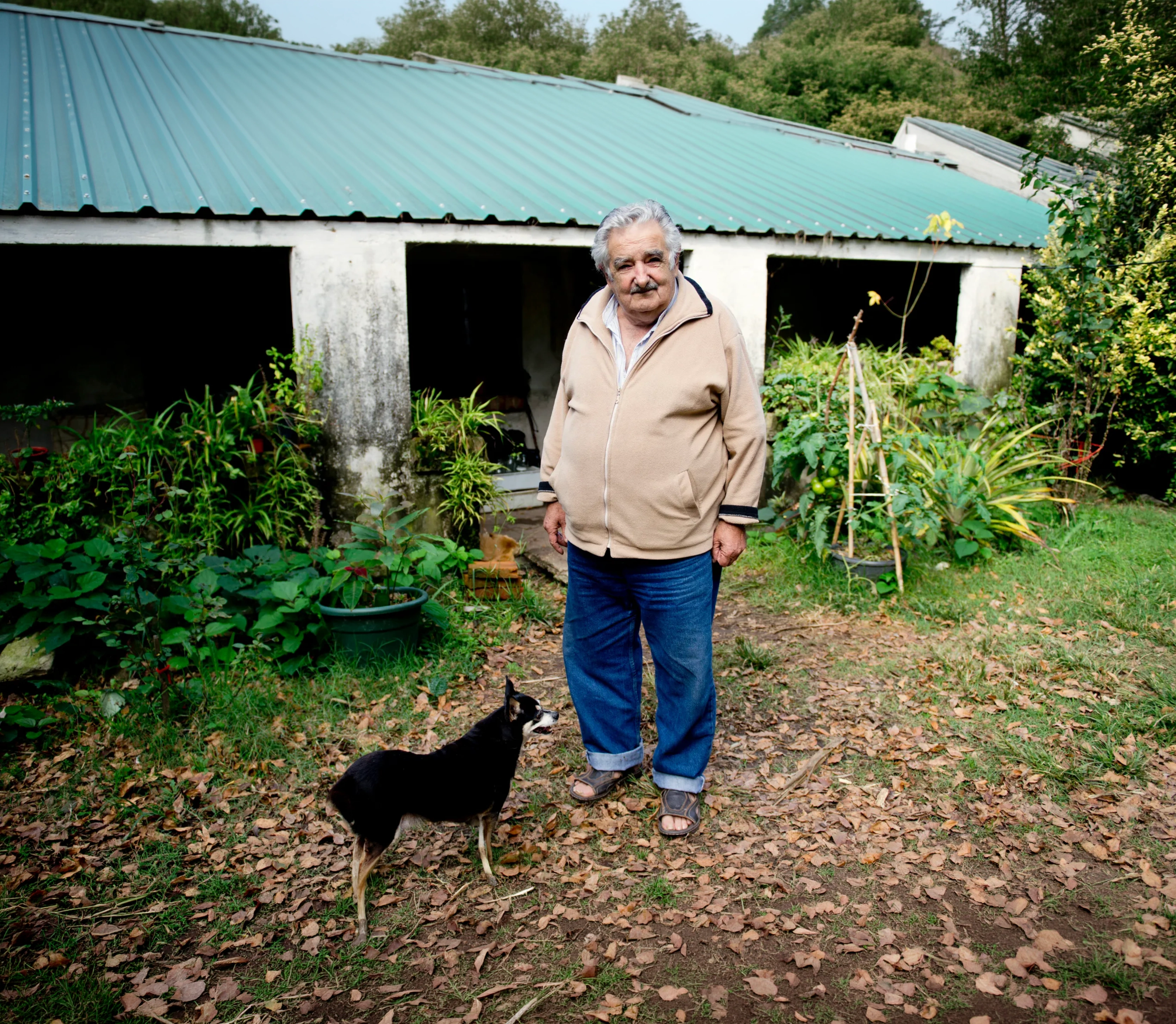
We might find it, and yet we keep looking. José Mujica, Uruguay’s former president, understood this better than almost anyone. He chose to live in his tiny tin-roofed home rather than the presidential palace. As he put it, “If you don’t have many possessions, then you don’t need to work all your life like a slave to sustain them.”
The irony is that the simple pleasures of Eden are accessible almost anywhere. Today at lunch, here in Uruguay, I watched my kids fall in love with a dog at the next table. The owner, a kind man, took them all for a long walk in the grass, chatting happily with my kids as they played. A few hours later, my 3-year-old mentioned that he was thirsty and an elderly woman walking by offered water from her backpack. These small acts of kindness, these moments of spontaneous community, they are the building blocks of utopia. They cost nothing. They require no fancy infrastructure or advanced technology. They simply need humans to be human with each other.
The irony deepens when I reflect on my own journey with wealth. I can speak confidently about money not buying happiness. I lived it. I went from a childhood without much money, playing in an old barn and having pine cone wars in the woods with my brothers, to boarding private planes and going on shiny ski trips. Along with that wealth came something else: depression.
Those idyllic childhood days of running through the woods were replaced by the pressure and darkness that accompanied prosperity. The money, and all that came with it, covered up the innocence of childhood. I have spent decades since trying to build a life based on the things that money cannot buy - the things that the people of Eden have in abundance.
It’s also not a coincidence that José Mujica, the country's recent president, chose to live in his tiny tin-roofed home rather than the presidential palace. As he put it, “if you don't have many possessions, then you don't need to work all your life like a slave to sustain them.”
Sam Altman says that societies must often choose between growth and inclusivity, noting that "economic growth matters because most people want their lives to improve every year, [and] economic inclusivity matters because it's fair, produces a stable society, and can create the largest slices of pie for the most people." We want all of our lives to improve.
As Pope Francis asks, "what if the economic, the social, and the ecological challenges we face are really different faces of the same crisis? What if replacing the objective of growth with new ways of relating will allow for a different kind of economy, one that meets the needs of all within the means of our planet?" Perhaps the answer is indeed in the gardens of Eden. We see that the human spirit doesn't actually require endless growth or abundant wealth. It requires what this place has: community, dignity, enough for comfort, and the space to nurture relationships. A simple home with a garden, a bakery down the block, family nearby, the town concert.
These are measures of a good life.
In his Meditations, Marcus Aurelius said “You see how few things you have to do to live a satisfying and reverent life? If you can manage this, that’s all even the gods can ask of you.”
Someone just walked by, pointed at my notebook with a smile and said warmly, "que lindo!” My pen, a notebook, and a coffee, all for about $10. Worth a million bucks. In our pursuit of more - more experiences, more objects, more status symbols - we pour into cities looking for income. We pour concrete to build towers and asphalt to build roads to move us between those towers. We pour coffee into our systems to keep our adrenal glands firing, and then ingest sugar and fat to soothe our depleted nerves. As paradise gets paved to put up parking lots, the birds fly away. We find it harder to find a place to sit with our morning tea, with warm sun shining on our face. The sunshine gets outshone as we lock ourselves behind tinted glass, staring at screens, forgetting the joy that simple sunshine or a fluffy baby bird or a warm conversation can give us.
May we remember what actually matters as we build towards a vision of the future of humanity. May we remember Eden as we build that utopia.